Sound of the Wild: The Music of Heart of the Beast
What happens when a film score needs to capture the power of nature, human vulnerability, and the deep bond between a man and his dog? For composer Jared Michael Fry, Heart of the Beast offered an opportunity to explore these themes through a musical world shaped by unusual sounds, vocals, and orchestral textures.
Directed by David Ayer, the film follows a story of survival in the Alaskan wilderness. But for Fry, the music is about more than the physical environment. It also explores the characters’ inner worlds and their connection to the landscape around them.
In this interview, Fry discusses the creative process behind Heart of the Beast, his collaboration with Ayer, working with the Alaskan vocal group PAMYUA, and developing a musical language that balances the unfamiliar with the familiar.
From Bands to Film Scoring
Fry grew up in California, playing piano at home and brass instruments in school marching and concert bands. As a teenager, he also began writing music with friends in ska, punk, and rock bands.
It was not until he attended Berklee College of Music that he discovered film scoring as a possible career path.
– I entered Berklee pursuing songwriting. It was in the midst of my time at Berklee that I had that fork in the road moment. Everything about Film Scoring sounded like the better choice for me, he explains.
Since then, Fry has worked across a variety of musical styles and productions, including through his time at Bleeding Fingers Music. His experiences working alongside composers such as Hans Zimmer, Steve Jablonsky, and Joseph Trapanese have also helped shape his approach.
– Every experience and interaction has shaped the composer I am today and the one I’m aiming to be. It seems the bar of craftsmanship, production, speed, all the above continues to be raised as I progressed in my career.
Through his work writing library music and contributing to other composers’ projects, Fry has learned to navigate different genres and production environments. These experiences have also given him a broader understanding of what it takes to bring a project across the finish line.
Wilderness Becomes a Character
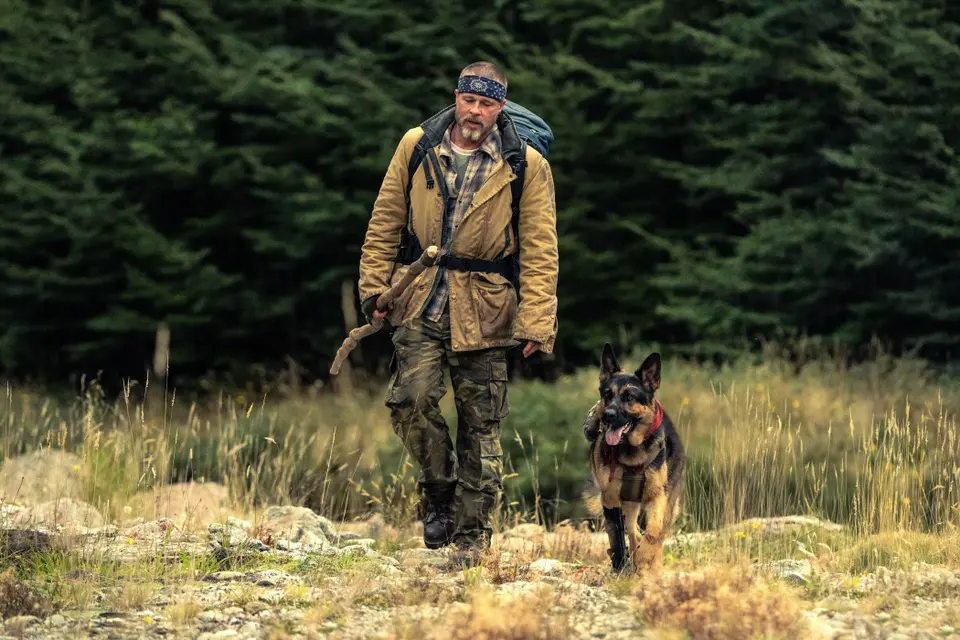
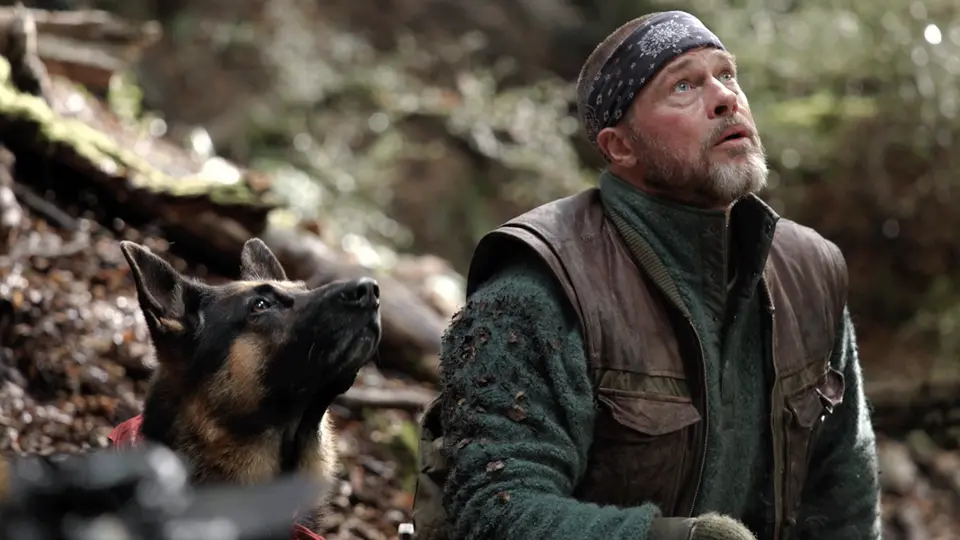
Heart of the Beast, which premiered on September 25, 2026, is an American survival thriller starring Brad Pitt as a retired Special Forces veteran who must navigate a grueling 58-mile (93-kilometer) trek to safety with his traumatized combat German Shepherd after their seaplane crashes in the Alaskan wilderness.
In Heart of the Beast, the wilderness is more than a backdrop. It is a constant presence, and this became an important starting point for Fry’s musical approach.
– The wilderness is a character. Always present.
He describes the landscape as dangerous, beautiful, physical, and peaceful. Although it surrounds James and Odin, it is also deeply intertwined with their story.
For Fry, the challenge was to create music that did not simply accompany the action on screen, but also gave the landscape a voice of its own. This approach connects to what Fry describes as the film’s spiritual journey. In his conversations with director David Ayer, the journey was described as a “shamanistic march,” a concept that helped shape the direction of the score.
– The intent of the score is to give voice to the landscape, make itself known, but it also reaches out to James and calls him to itself, Fry explains.
He also describes how vocals are used during the film’s most intense moments to evoke a trance-like state, bridging the physical and the spiritual. The result is a score that seeks to express something beyond what can necessarily be communicated through dialogue or conventional orchestral writing alone.
One of the most distinctive aspects of the Heart of the Beast score is it’s instrumentation. Fry draws on a broad palette of sounds, including chromatic gamelans, layered drums, unconventional choral vowels, and woodwind effects inspired by the natural environment.
The resulting sound moves between the unfamiliar and the familiar, reflecting a story in which the characters encounter a world in a new and unexpected way.
Fry drew inspiration from listening to music from around the world, carefully selecting sounds that would help shape the film’s musical identity.
– Each instrument was chosen because it evoked a feeling of mystery and spirituality. Combined, the palette was both foreign and familiar. Definitely a fusion of cultures. The story was the same. This American veteran and his veteran dog journey to somewhere familiar, but encountering it in a new and unexpected way
This fusion of musical influences is also reflected in Fry’s collaboration with the Alaskan vocal group PAMYUA, whose performances, including singing in the Yup’ik language, bring another distinctive dimension to the score.
– Truly, they brought the authenticity to the musical storytelling. Their voices grounded the spirituality and landscape. They naturally carry the weight of their culture into their performances. They perfectly brought the depth of the past and spiritual into the present in such an intimate way, he explains.
From Alaska to London
The score brings together several distinct musical worlds. PAMYUA’s vocal performances were combined with the London Voices choir and a 50-piece London Contemporary Orchestra.
The recordings took place across Alaska and London, with Fry working on the orchestra and choir sessions at Air Studios. Much of the music had already been developed and programmed in demos before the recording sessions began.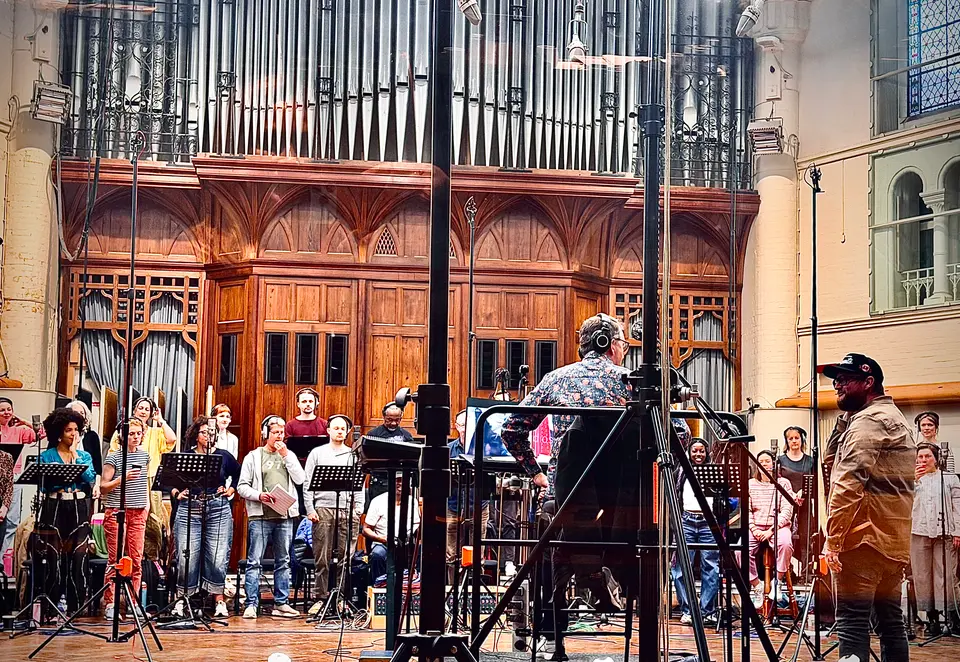
– I had mocked up everything in my demos. With the promise that when the real thing comes it’s going to be much better… and it certainly was.
While the orchestra and choir were being recorded in London, Fry reconnected with PAMYUA to work on their vocal performances. The group recorded in Alaska, while his assistant on the project, Pierce Constanti, helped prepare and send the recordings to Fry for review after each day’s sessions.
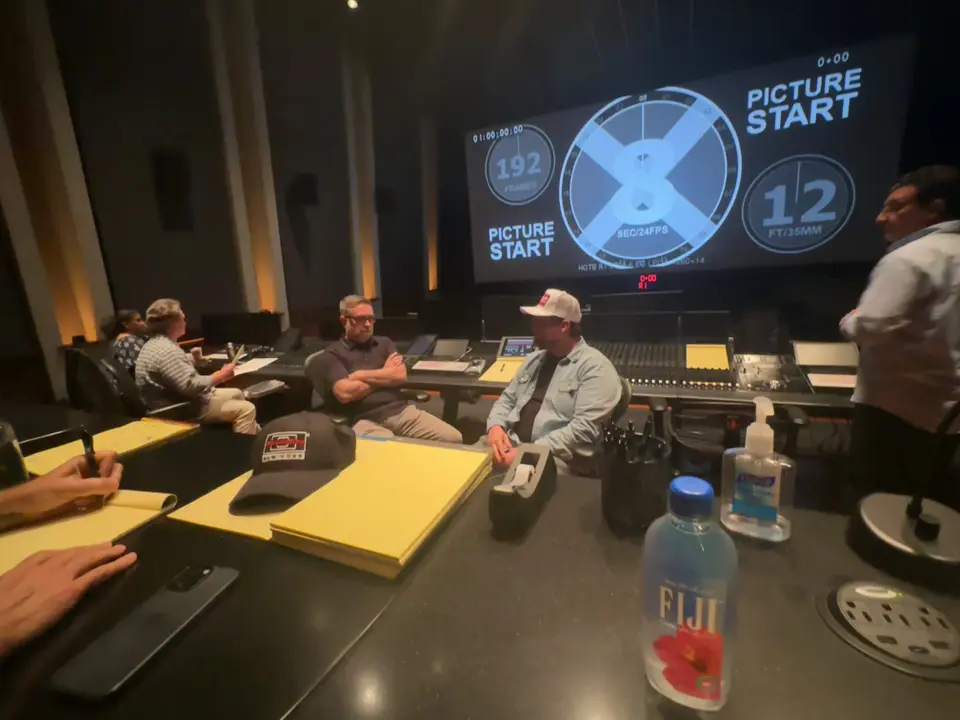
– Every aspect of the recording, every musician and artist was so amazing, it couldn’t not be wonderful. It all came together in LA with John Chapman who mixed the score. Everybody crushed it. I’m so thankful.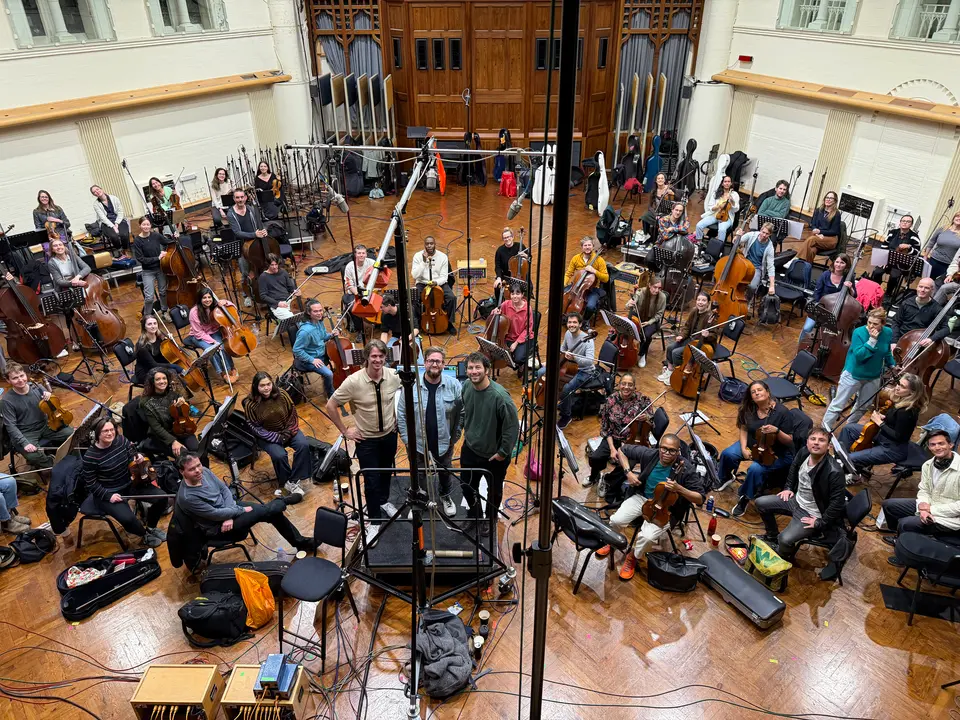
A Shared Musical Identity
The relationship between James and Odin lies at the heart of the film, and this is reflected in the score. Rather than treating them as two entirely separate musical identities, Fry approached their relationship as something shared.
– Shared identity for sure. One of the biggest melodic themes was what we called their ‘Determination Theme’. It plays throughout the score as they’re pushing forward together.
Without spoiling the film, at the end - when it comes to a hard turning point in the story, the theme expresses perseverance and the connection between the two characters. It gives the music a unifying force, through the hardships they face, linking the emotional heart of the story to their physical journey in the wilderness.
Fry’s collaboration with director David Ayer was also an important part of the process. Heart of the Beast marks their third collaboration, following The Beekeeper and A Working Man.
– I think like any relationship that grows and develops, you’re able to be more open with one another. On this one, there was a vulnerability in the storytelling for both the filmmaking and score combined for which I’m glad we had the foundation of those past projects. David is great at sharing his ideas in inspiring concepts - there’s a trust that I’ll find the musicality of his ideas. I’m given a good amount of freedom to come up with the scores unique musical voice.
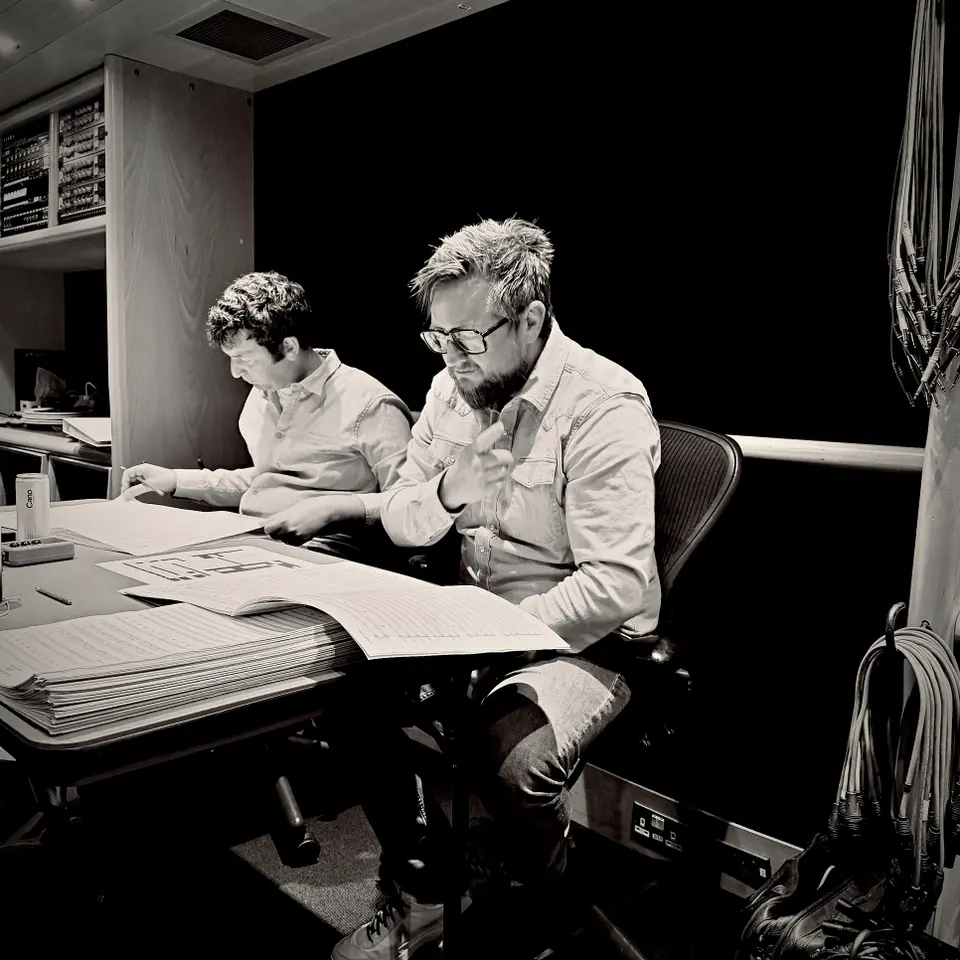
Fry began composing for Heart of the Beast at the script stage. He started by writing musical suites, melodies, and themes at the piano, while searching for a harmonic language that could support the story.
– Finding a harmonic language to live in was important. The initial writing was to the broader feel of the story. And much of it all worked out really well when the picture came along.
The process continued to evolve as the film was edited and refined.
– The musical ideas and themes worked from the beginning, but how to tell the story continued to evolve. It was a discovery process. At one point the score was sounding a bit more adventurous - but that wasn’t the story we wanted to tell. It was a process for sure.
Looking back, he identifies restraint as the biggest creative challenge of the project.
– The biggest challenge was restraint. That was the best writing tool, if I can call it that.
It is an especially interesting observation for a film in which both nature and survival might invite grand musical gestures. Sometimes, the most effective choice is not to add more, but to know when to hold back.
Although Fry finds it difficult to separate the music from the story, he also hopes listeners will find their own experience in the soundtrack album.
– I find the music so connected to the specific story I find it hard to divorce them from each other. However, I do hope that listening to the score on it’s own is found to be evocative and inspiring throughout.
When asked to name a personal favourite cue, he points to the title track, «Heart of the Beast».
– To me it’s a celebration or the anthem of the film.
As he moves on to future projects, Fry acknowledges that every film requires a different approach. That constant change is also part of what he enjoys about composing for the screen.
And when asked to recommend a musical work that deserves to be discovered by more listeners, his choice is somewhat unexpected: William Walton’s Symphony No. 2.
– Ok, it’s not a soundtrack, but it sounds like it could be one. It's simply an amazing work of music. Unrelenting and captivating.
It is a fitting recommendation from a composer whose work on Heart of the Beast explores how music can do more than accompany a story. It can give a voice to the landscape, evoke the spiritual, and express connections that do not always need words.
About Jared Michael Fry
♪ From California, USA.
♪ Composer for the new film, Heart of the Beast, which premiered on September 25, 2026.
♪ Crafts scores that seamlessly blend with narrative, drawing audiences deeper into the world on screen.
♪ Following his Emmy-nominated work at Hans Zimmer’s Bleeding Fingers, Jared has collaborated with renowned composers like Benjamin Wallfisch, Steve Jablonsky, Joseph Trapanese and electronic artist Luke Steele of Empire of the Sun.
♪ His diverse credits include blockbusters like Alien: Romulus, The Flash, and Red Notice, action thrillers like Thirteen Lives and The Invisible Man, the horror sequel It Chapter 2, and many more.

Å finne filmens egen stemme: Musikken til En Nasjon i Sjakk - Intervju med komponist Johannes Ringen